
The Operator Shortage Is Turning Fleet Planning Inside Out
Contractors keep asking whether they have enough machines. In 2026, the sharper question is whether the right operator, machine, attachment, and schedule can line up on the same day.
The construction labor problem is usually framed as a hiring problem. Contractors need more people. Crews are thin. Skilled trades are hard to find. Everyone has heard that version.
For equipment owners, the problem is more specific and more expensive.
A machine is only available when a qualified operator is available with it. A compact track loader sitting in the yard does not clear backlog. An excavator without a confident operator becomes a slower, riskier version of itself. A dozer with a new hire in the seat may move dirt, but it may not produce grade, protect margins, or avoid damage. The payment keeps running either way.
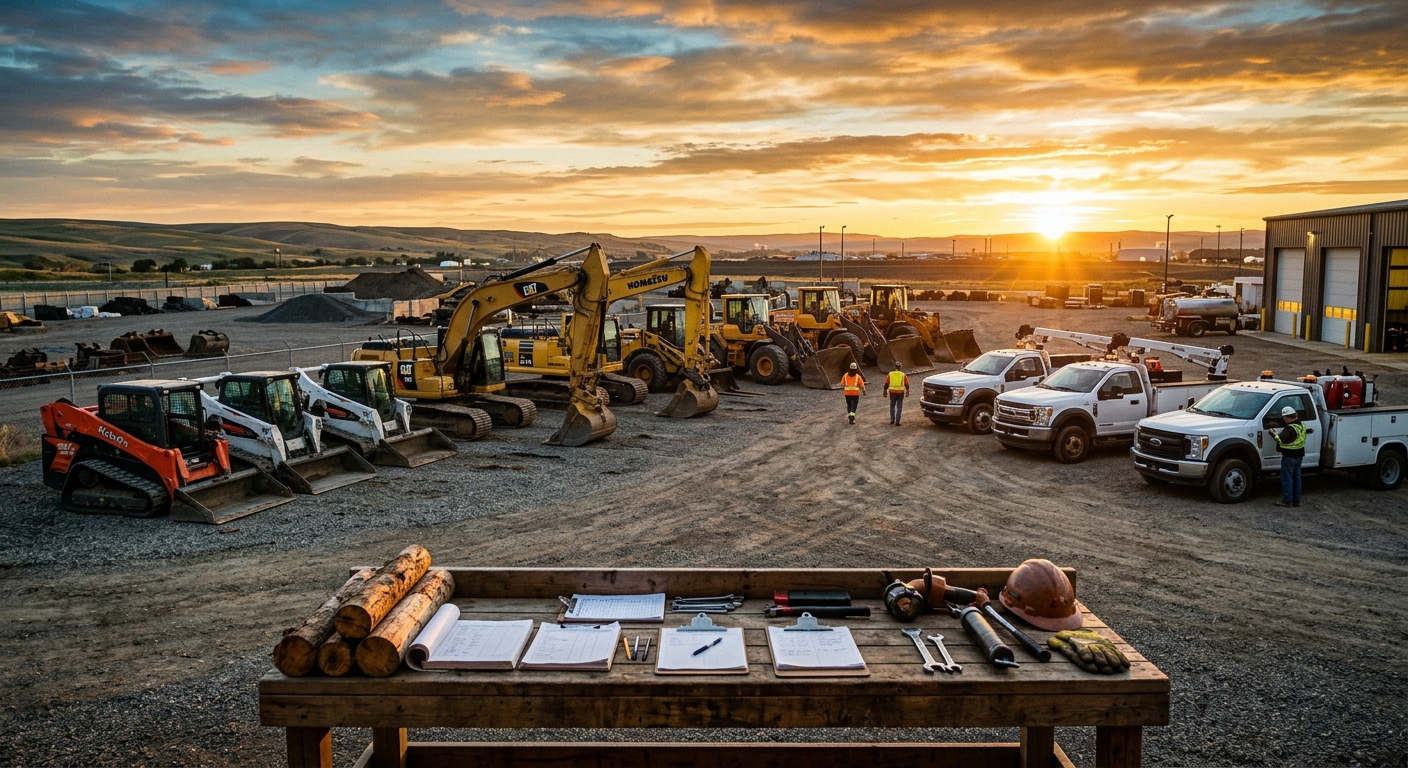
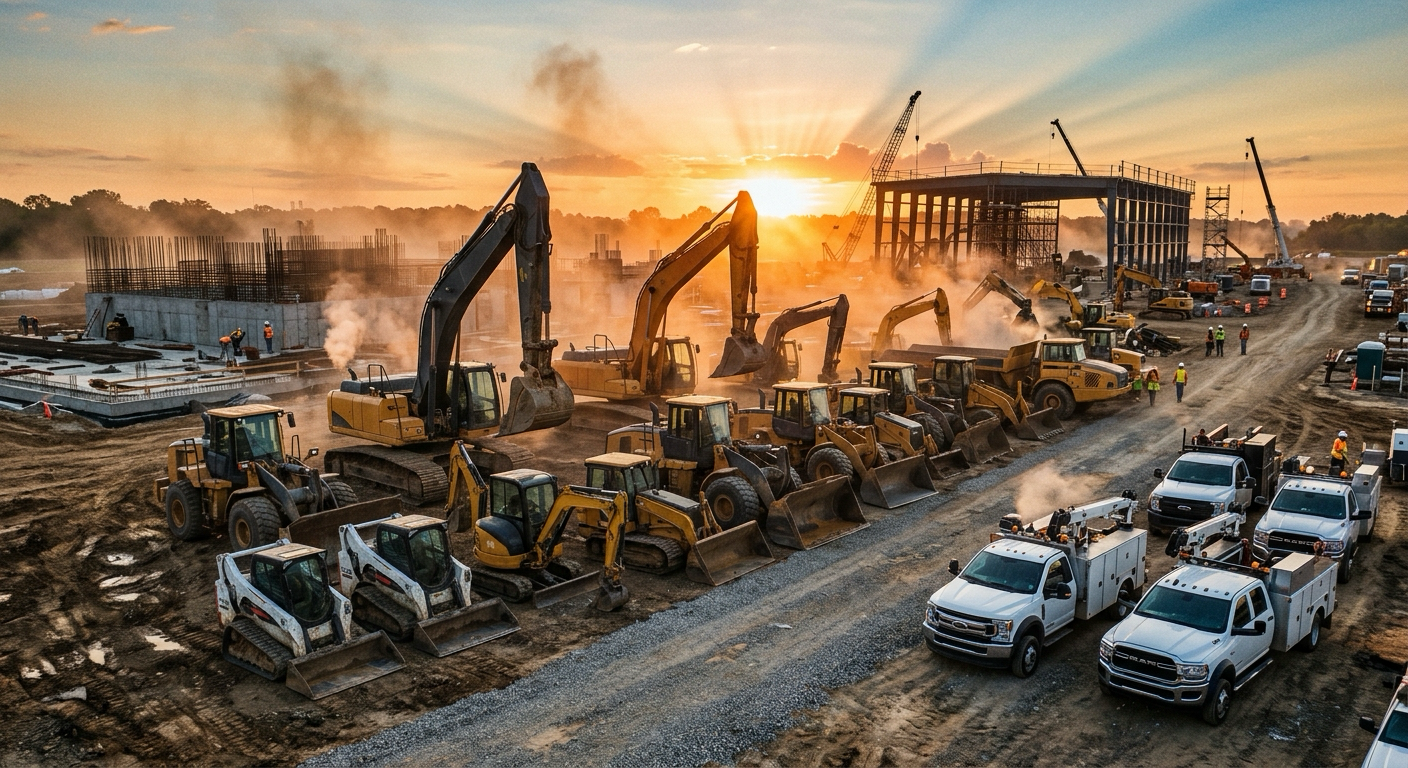
That changes fleet planning. Owners can no longer treat equipment capacity and labor capacity as separate columns. The real unit of production is the complete setup: operator, machine, attachment, truck, trailer, support gear, and enough room in the schedule to do the job right.
FieldFix Editor’s Note: If a machine has hours but no clean job history, it is hard to know whether it made money. Track which operator ran it, what job it was on, what broke, and how long it sat between billable work. FieldFix helps equipment owners turn machine activity into cost-per-hour decisions instead of end-of-month guessing.
The market is not slow enough to hide the problem
The latest construction spending numbers show a market with enough work to expose weak operations. The U.S. Census Bureau reported that construction spending in April 2026 was running at a seasonally adjusted annual rate of $2.172 trillion. That was up 0.4 percent from March and 0.9 percent from April 2025. Public construction reached $532.7 billion, with highway construction at $149.6 billion.
Those numbers do not mean every contractor is busy or profitable. They do mean the market is not giving owners an easy excuse. There is still road work, utility work, site work, public work, data center work, school work, maintenance work, and repair work moving through the system.
At the same time, Associated Builders and Contractors reported that the construction industry had 259,000 job openings at the end of April, up 52,000 from a year earlier. ABC also noted that nonresidential construction spending inched higher in April, while private nonresidential work stayed under pressure outside of the data center segment.
That combination matters. Work exists, but it is uneven. Labor is tight, but not every market has the same shortage. Contractors cannot count on broad demand to cover sloppy fleet decisions. They have to know exactly which machines are productive, which ones need a better operator, and which ones are mostly absorbing insurance, depreciation, repairs, and interest.
Owning more iron does not solve an operator bottleneck
Buying another machine feels like a clean answer. It adds capacity on paper. It may help win jobs. It may reduce rental dependence. It may let an owner say yes faster.
But if the company is short on operators, another machine can become a very expensive parking-lot decoration.
This is where fleet math gets uncomfortable. A contractor may own four compact track loaders but only have two operators who can run them productively. A site contractor may have three excavators but only one person who can trench cleanly around utilities without babysitting. A land-clearing outfit may have the carrier and cutter, but only one operator who understands terrain, hidden debris, cooling, production pace, and when to stop before the repair bill gets stupid.
The machine count looks fine. The usable capacity is smaller.
That does not mean owners should stop buying equipment. It means the purchase decision has to start with labor reality. Who will run it? Can they run it well enough to pay for it? How many hours per month does the machine need to work? What happens when the best operator is on another job, sick, training someone, or pulled into estimating and repairs?
A machine bought for the operator you wish you had is usually a weaker investment than a machine bought around the operator you actually have.
The skilled seat is becoming the scarce asset
The Bureau of Labor Statistics says construction equipment operators held about 539,500 jobs in 2024. BLS projects 4 percent employment growth from 2024 to 2034, with about 46,200 openings per year on average. Many of those openings come from people leaving the occupation or retiring.
That is the part owners feel every day. Replacing an operator is not like replacing a set of bucket teeth. A good operator carries production speed, judgment, jobsite awareness, mechanical sympathy, and customer-facing professionalism. They hear a hydraulic pump change tone before a beginner notices anything. They know when a truck is about to get stuck. They can make an average machine look strong and make a strong machine last longer.
Bad operation does the opposite. It burns fuel, beats up undercarriages, breaks attachments, damages finished work, creates rework, scares customers, and turns a profitable schedule into a string of small problems.
That is why the operator shortage is really a use problem. The fleet may have enough horsepower, but the business may not have enough skilled seats.
Technology helps, but it does not erase the seat
Machine control, grade assist, payload systems, telematics, cameras, object detection, automatic features, and better controls all matter. They reduce learning curves. They help operators work more consistently. They give managers better visibility. They can make a newer operator safer and faster than they would have been ten years ago.
Still, technology does not remove the need for judgment.
A grade system can help a dozer hit target elevation. It cannot decide whether the site is ready, whether water will move the way the plan says it should, or whether a rushed pass will create a bigger problem later. A compact loader can have better visibility and control response. It still needs someone who understands balance, ground pressure, attachment limitations, bystanders, buried hazards, and what the job is supposed to look like when the crew leaves.
The practical takeaway is not anti-technology. It is pro-discipline. If a contractor buys technology to make average operators better, that is a defensible plan. If they buy technology to avoid training, documentation, supervision, and maintenance, the return will disappoint them.
The best fleets will use technology to standardize the basics, then reserve their best people for the work where judgment drives margin.
Scheduling should be built around crews, not machines
A lot of small and mid-size contractors still schedule by machine availability. Is the excavator open? Is the loader open? Can the dump trailer be there Tuesday?
That is too shallow.
The better question is whether the complete crew package is available. If the work requires a careful excavator operator, a skid steer with the right attachment, a laborer who can spot utilities, a truck that can move spoil, and a foreman who can talk to the customer, then the schedule should reserve all of that together.
Otherwise, the company creates fake capacity. The calendar says yes. The jobsite says no.
This is where dispatch discipline starts paying for itself. Owners should know which operators can run which machines, which attachments need experienced hands, which jobs require the best people, and which machines should not be paired with certain operators yet. That sounds basic, but many companies keep it informal until the business grows past memory.
When that happens, the owner becomes the router, trainer, mechanic, estimator, customer service department, and complaint desk. The fleet may grow, but the system does not.
Training has to be attached to the fleet plan
If operators are scarce, training cannot be treated as spare-time work. It has to be part of the fleet plan.
That means deciding which machines are training-friendly, which jobs are safe for development, and which operators should be cross-trained before the company is desperate. It also means budgeting for slower production while someone learns. Owners often hate that because the cost is visible. The hidden cost of not training shows up later as missed work, overworked veterans, rushed hires, avoidable repairs, and machines that sit because only one person can run them.
Cross-training does not mean every employee has to master every machine. That is unrealistic for many fleets. It means the company should reduce single points of failure. If only one person can run the grader, the mulcher, the crusher, the milling attachment, or the long-reach excavator, that person controls a large chunk of company capacity whether anyone admits it or not.
A simple skills matrix can change the conversation. List each operator, each machine class, each attachment category, and each job type. Mark who is independent, who needs supervision, who is in training, and who should not be assigned yet. Then look at the next 60 days of work. The gaps will be obvious.
Maintenance and labor are connected
Operator shortage and maintenance costs are usually discussed separately. They should not be.
Good operators protect equipment. They grease when needed, report problems early, avoid dumb abuse, warm machines up, cool them down, keep an eye on tracks and tires, and stop before a small issue turns into a major failure. They also give better feedback to mechanics because they can describe what changed.
Thin labor does the opposite. When the crew is stretched, inspections get rushed. Grease intervals slip. Small leaks wait. Attachments get returned dirty or half-broken. A machine gets sent because the schedule is full, not because it is ready. Then downtime lands in the middle of the week when every hour is expensive.
The operator shortage therefore increases the value of simple maintenance systems. Not fancy for the sake of fancy. Just clear records, assigned responsibility, hour tracking, repair notes, and a way to see which machines are getting abused or ignored.
If a machine only works well with one operator, that is a training issue. If it breaks mostly under one operator, that is a coaching issue. If nobody knows because the history is scattered across texts and memory, that is a management issue.
The owner’s question should change
The old question was, “Do we have enough machines?”
The better 2026 question is, “How many profitable crews can we field tomorrow morning?”
That number is harder to inflate. It forces the owner to count operators, machines, attachments, trucks, trailers, maintenance status, job difficulty, and supervision. It also makes the next move clearer.
Maybe the company needs another compact loader. Maybe it needs a better trailer. Maybe it needs to rent instead of buy. Maybe it needs to raise wages for the operator who quietly carries the schedule. Maybe it needs to stop selling work that depends on one overbooked person. Maybe it needs to train two people on the attachment that keeps showing up in profitable estimates.
The answer will vary by contractor, but the principle holds: fleet growth without operator capacity is not growth. It is overhead.
The contractors who handle this well will not be the ones with the most iron in the yard. They will be the ones who know which combinations make money and protect those combinations from chaos. In a tight labor market, the skilled seat is part of the machine. Plan around it.